Showing posts with label Rock. Show all posts

Sunday, 24 October 2010

Janis Joplin "Joplin In Concert"

cover_front blog
Janis Joplin

"Joplin In Concert"
( 2XLP Columbia Records, 1972 )
Catalog # C2X 31160


Tracklisting:
A1 - Big Brother & The Holding Company - Down On Me 3:05
A2 - Big Brother & The Holding Company - Bye, Bye Baby 4:29
A3 - Big Brother & The Holding Company - All Is Loneliness 5:44
A4 - Big Brother & The Holding Company - Piece Of My Heart 4:19
B1 - Big Brother & The Holding Company - Road Block 2:53
B2 - Big Brother & The Holding Company - Flower In The Sun 3:07
B3 - Big Brother & The Holding Company - Summertime 4:31
B4 - Big Brother & The Holding Company - Ego Rock 8:32
C1 - Full Tilt Boogie Band - Half Moon 4:36
C2 - Full Tilt Boogie Band - Kozmic Blues 6:05
C3 - Full Tilt Boogie Band - Move Over 5:09
D1 - Full Tilt Boogie Band - Try (Just A Little Bit Harder) 8:13
D2 - Full Tilt Boogie Band - Get It While You Can 7:04
D3 - Full Tilt Boogie Band - Ball And Chain 9:15

Personnel & Credits:
Peter Albin - Bass
Peter Alvin - Bass
Sam Andrew - Guitar, Vocals
Richard Bell - Piano
Brad Campbell - Bass
Fred Catero - Engineer
David Diller - Engineer
Dave Gatz - Drums
David Getz - Drums
Nick Gravenites - Performer
James Gurley - Guitar
J. Hall - Composer
Dan Healy - Engineer
Janis Joplin - Guitar, Vocals
Elliot Mazer - Producer
Ken Pearson - Organ, Programming
Clark Pierson - Drums
Bert Russell - Composer
Mortimer Shuman - Composer
Owsley Stanley - Engineer
Willie Mae Thornton - Composer
John Till - Guitar
Traditional - Composer

Notes:
Artwork By [Design] - Bob Cato , Squadra Galileo
Compiled By - Elliott Mazer
Engineer [Re-recording, Editing] - Don Puluse , Larry Keyes , Tim Geelan
Photography - David Gahr

Review:
About half of this two-record set features Janis Joplin with Big Brother & the Holding Company in 1968, performing songs like "Down on Me" and "Piece of My Heart." The rest, recorded in 1970, finds her with her backup group, Full Tilt Boogie, mostly performing songs from I Got Dem Ol' Kozmic Blues Again Mama! Joplin puts herself out on-stage, both in terms of singing until her voice is raw and describing her life to her audiences. Parts of this album are moving, parts are heartbreaking, and the rest is just great rock & roll.
By William Ruhlmann (AMG)

Note:
Ripped from original vinyl Albums
No separate tracks.

By Celo

Wednesday, 11 August 2010

Gli Area

Area1

Gli Area negli anni Settanta. Da sinistra: Paolo Tofani, Demetrio Stratos, Giulio Capiozzo, Ares Tavolazzi e Patrizio Fariselli.

Biografia:
Gli Area, la formazione piu' importante del rock progressivo italiano degli anni 70, rappresentano il fenomeno musicale e sociale del periodo identificando utopie e desideri della generazione degli "anni di piombo". GIULIO CAPIOZZO, gia' batterista di DEMETRIO STRATOS, incontra il tastierista LEANDRO GAETANO e il bassista PATRICK DJIVAS, entrambi al servizio di Lucio Dalla. Per un po' di tempo accompagnarono DEMETRIO STRATOS in un repertorio di canzoni rock, gettando le basi per la ricerca e sviluppo di espressioni sonore nuove, coinvolgendo in questa esperienza, ben presto, altri musicisti. Il primo disco, registrato in un cascinale della bassa padana viene realizzato con STRATOS, CAPIOZZO, il flautista Victor Edouard Busnello,PATRIZIO FARISELLI alle tastiere, DJIVAS al basso, Johnny Lambrizzi alla chitarra, che pero' lascia subito il posto a PAOLO TOFANI, veterano della scena italiana (CALIFFI, NOI TRE), appena rientrato dall'Inglilterra con idee rivoluzionarie di elettronica applicata alla musica. Un disco ad alto potenziale con il primo pezzo, aperto da una voce araba, introduce il pezzo che diventera' nella storia del rock progressivo, un pezzo sicuramente da salvare durante un naufragio su un' isola deserta. "Luglio Agosto Settembre (nero)" pezzo che coinvolge tutta la generazione di giovani post 68, canticchiato dal movimento degli studenti, nei Centri Sociali, nei parchi. Disco dallo stile rock nervoso graffiante, si rifa' ad un certo jazz rock d'assalto spaziando nell'improvvisazione e sperimentazione.
L'impegno politico si colloca nell'area della protesta extraparlamentare, senza nascondere simpatie per un certo "folklore" filo arabo "International Popular Group"; sigla che accompagna sempre la sigla AREA, e una certa simpatia per il movimento, tanto da allegare come gesto provocatorio, all'uscita del primo album ARBEIT MATCH FREI, una minacciosa pistola di cartone.
Busnello se ne va nel tempo, insieme a Djivas e arriva ARES TAVOLAZZI. Area suonano a fianco dei NUCLEUS e dei GENTLE GIANT, per fare esempi, e suonano in concerti in solidarieta' per il Cile, in un concerto terapeutico all' Ospedale Psichiatrico di Trieste, al Vigorelli una serata a favore del Vietnam con JOAN BEAZ, la partecipazione consecutiva per tre anni al FESTIVAL DI RE NUDO, AL PARCO LAMBRO di MILANO.
Vengono invitati al FESTIVAL MONDIALE DELLA GIOVENTU' A CUBA. Una delle ultime occasioni di vedere gli AREA, purtroppo senza DEMETRIO fu quella del 14 giugno 79 all' Arena di Milano. Li quella sera, tantissima gente, stracolma, tutti i migliori musicisti italiani e gruppi erano radunati li' al grande raduno, organizzato per raccogliere fondi per sostenere l'operazione di DEMETRIO STRATOS, ricoverato in ospedale a causa di una improvvisa e fulminante aplasia midollare che lo stronco' tragicamente la sera prima del Concerto organizzato all' Arena.
Diedero l'avvio a quel pensiero fantastico che diventera' il motto del movimento 1977.
"La fantasia distruggera' il potere una risata lo seppellira'"
Da ricordare tra le tante una frase da GIOIA E RIVOLUZIONE: -" ....il mio mitra e' un contrabbasso che ti spara sulla faccia cio' che pensa della vita; con il suono delle dita si puo' fare una battaglia che ci porta sulle strade, della gente che sa amare."

Area - Caution Radiation Area

Area - 1978 (Gli Dei Se Ne Vanno, Gli Arrabbiati Restano!)

Area - Chernobil 1997

Area - Event '76

Area - Maledetti

Area - Tic & Tac

Covers & Foto

Links in comments.

By Celo

Sunday, 27 June 2010

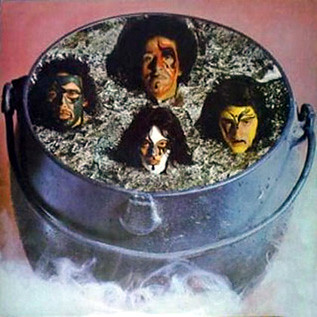
Assim Assado "Assim Assado"

Assim Assado

"Assim Assado"
( LP CID Records, Brasil, 1974 )
Catalog # 8003


Tracklisting:
1. Viva Crioula
(Miguel de Deus)
2. Na Boca da Estrada
(Miguel de Deus)
3. Até
(Miguel de Deus / Vanir Roberto)
4. Sombras
(Miguel de Deus / Fernando Rangel)
5. Morena
(Miguel de Deus)
6. Pedaços
(Miguel de Deus / Adolfo)
7. Sol Amarelocinza
(Miguel de Deus)
8. Rock Blue
(Miguel de Deus)
9. Sol, Sal, Sol Tropical
(Miguel de Deus)
10. Lunática Marciana
(Miguel de Deus / Marciana)

Review:
The band name and album cover reveal explicitly the impact of: Dry and Wet. Investing in androgyny, progressive rock and samba-soul, Just Baked tried to be a response of small Industrial Company Records to the enormous success that the Dry and Wet made by the young audience. Lead by Miguel de Deus (ex crests), who signed most of the compositions and takes the guitar and vocals, the group never got off the ground, leaving only this single disc, now almost forgotten. Curiosity: In 1977 Michael of God (Miguel De Deus) falls headlong into funk, throwing the very interesting (and rare) "Black Soul Brothers"

By Celo

Tuesday, 27 April 2010

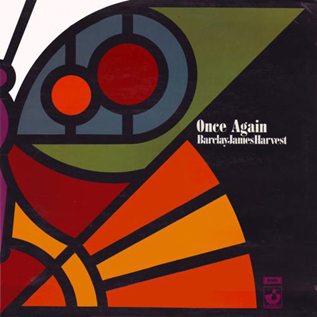
Barclay James Harvest "Once Again"

Barclay James Harvest

"Once Again"
( LP Harvest Records, 1971 )
Catalog # SHVL 788


Tracklisting:
A1 - She Said
Written-By - Lees
A2 - Happy Old World
Written-By - Wolstenholme
A3 - Song For Dying
Written-By - Barclay James Harvest
A4 - Galadriel
Written-By - Lees
B1 - Mocking Bird
Written-By - Barclay James Harvest
B2 - Vanessa Simmons
Written-By - John Lees
B3 - Ball And Chain
Written-By - Barclay James Harvest
B4 - Lady Loves
Jew's Harp - Alan Parsons
Written-By - Barclay James Harvest

Personnel & Credits:
Conductor - Robert Godfrey
Engineer - Peter Bown
Leader [Orchestra] - Gavin Wright
Producer - Norman Smith

Notes:
Released on a yellow/green Harvest label without EMI logo in a fold-out cover. The second pressing has such a logo.

Review:
The band's follow-up still finds it working very much in the vein of orchestral rock, largely driven by Stewart Wooly Wolstenholme's keyboards and the presence of the London Symphony Orchestra. The reach of the music exceeds the grasp of the lyrics, though — they lack the cold oracularity of Peter Sinfield or the allusive cleverness of Peter Gabriel. Still, there's some fine compositions here. "She Said" turns upon a keening opening Mellotron riff to develop into a slow-four dirge. "Song for Dying" shows off the band's fine ability at vocal harmonies, while the later concert standard, "Mocking Bird," shows a dramatic evolution from pensive acoustic guitar to a full-blown orchestral attack.
By Paul Collins
(AMG. Copyright © 2010 All Media Guide, LLC. Content provided by All Music Guide ®, a trademark of All Media Guide, LLC. All rights reserved.)

By Celo

Tuesday, 20 April 2010

Grand Funk Railroad Discography

Grand Funk Railroad Discography


Biografia:
I Grand Funk Railroad sono un gruppo hard rock statunitense, per la precisione un terzetto della fine degli anni sessanta e settanta.
Originari di Flint, seconda città del Michigan, il trio inanellò una serie incredibile di successi a cavallo del 1969 e il 1974, vendendo fino a 20 milioni di copie dei loro dischi. Il produttore, Terry Knight, ex d.j. radiofonico di una radio di Detroit, li conobbe ancora molto giovani proprio mentre presentavano un loro demo presso la radio in cui lavorava. Intuendo immediatamente le potenzialità del gruppo, li mise sotto contratto (col tempo i tre poi si resero conto di aver firmato un contratto-capestro) e imbastì per loro una campagna promozionale senza precedenti nella storia del music-business americano ed arrivò a tappezzare la Times Square di New York, un po' il cuore commerciale del mondo, di enormi manifesti con i volti del ragazzi del trio.
La loro produzione è importante poiché rappresentano un rock statunitense in difficoltà in quei tempi di fronte allo strapotere delle band inglesi (Rolling Stones, Led Zeppelin, Deep Purple, Uriah Heep, Pink Floyd, Jethro Tull etc).
I componenti, seppur non eccellendo singolarmente, si rivelarono un ottimo trio ed ebbero in Mark Farner[2] (cantante, chitarrista e autore della maggior parte della loro produzione artistica, insieme a Brewer) il loro leader, soprattutto per la sua voce.
Con il disco We're an American Band, e l'aggiunta ufficiale del quarto elemento alle tastiere, (Craig Frost), la band raggiunge ormai il pieno successo commerciale, ma allo stesso tempo conosce un lento declino d'ispirazione per lasciar posto ad una vena artistica sempre più rivolta agli ascolti. Il loro ultimo album, Good singing good playing, del '76, famoso per l'assolo di Frank Zappa in Out to get you, tra l'altro anche loro produttore, segna la fine di un gruppo ricordato più per rappresentazioni di canzoni di altri autori alle radio dell'epoca (The locomotion o Loneliness), che per i loro meriti effettivi, anche se hanno dato le basi ad altri gruppi rock USA (Aerosmith, Bruce Springsteen...) per la scalata contro la corazzata delle band inglesi.
Dopo lo scioglimento della band nel 1976, il gruppo venne riformato una prima volta nel 1981, con modifiche nella sua composizione, per produrre due nuovi album. Dopo altri anni di inattività artistica, la ripresa avvenne nel 1997.
Terry Knight è morto il 1º novembre 2004 all'età di 61 anni. Dopo aver perso i GFR, aveva provato, nel 1971, a rilanciare le sue convinzioni sull'heavy-rock con i Bloodrock, un sestetto texano con cui pubblicherà sei album, ma senza particolari fortune, se non un 40° posto nelle hits con il singolo “D.O.A.”. Fonderà poi una sua etichetta, la Brown Bag Records per cui incisero Mom's Apple Pie, John Hambrick, Wild Cherry e Faith , anch'essi senza riscontro commerciale, che indurranno Terry a lasciare lo stardome e rifugiarsi nella cocaina; sarà poi ucciso nel suo appartamento dal convivente della figlia in Texas, a seguito del suo intervento in difesa della figlia stessa, aggredita dal compagno tossicodipendente . Verrà comunque ricordato nello show-business americano come uno dei più spregiudicati e talentuosi manager, seppure altamente dispotico e controverso. Mark Farner , dopo la tragedia, ebbe a commentare: "Dopo tanti anni avrei voluto dirgli che lo avevo perdonato, che non gli serbavo più rancore per averci derubato tutti i nostri guadagni... purtroppo adesso è tardi".

Discografia:
In studio
1969 - On Time
1969 - Grand Funk
1970 - Closer to Home
1971 - Survival
1971 - E Pluribus Funk
1972 - Phoenix
1973 - We're an American Band
1974 - Shinin' On
1974 - All the Girls in the World Beware!!!
1976 - Born to Die
1976 - Good Singin', Good Playin'
1981 - Grand Funk Lives
1983 - What's Funk?
Live
1970 - Live Album
1975 - Caught in the Act
1997 - Bosnia
2002 - Live: The 1971 Tour

Note:
Informazioni Prese da Wikipedia
Use the ''Translation Tool''
Links in comments.

Not available on the free blog edition

By Celo

Monday, 12 April 2010

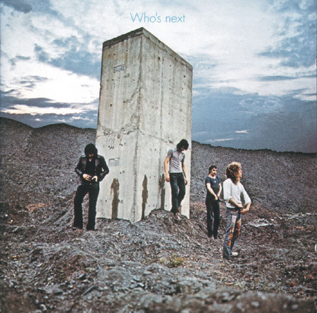
The Who ''Who's Next'' (Deluxe Edition)

The Who

''Who's Next''
(Deluxe Edition) (2003)
( Original LP released on Track Records, Catalog # 2408 102, UK, 1971 )


Tracklsting:
Disc: 1
1. Baba O'Riley
2. Bargain
3. Love Ain't For Keeping
4. My Wife
5. The Song Is Over
6. Getting In Tune
7. Going Mobile
8. Behind Blue Eyes
9. Won't Get Fooled Again
10. Baby Don't You Do It (Bonus Track)
11. Getting In Tune (Bonus Track)
12. Pure And Easy (Bonus Track)
13. Love Ain't For Keeping (Bonus Track)
14. Behind Blue Eyes (Bonus Track)
15. Won't Get Fooled Again (Bonus Track)
Disc: 2
1. Love Ain't For Keeping (Live At The Young Vic)
2. Pure And Easy (Live At The Young Vic)
3. Young Man Blues (Live At The Young Vic)
4. Time Is Passing (Live At The Young Vic)
5. Behind Blue Eyes (Live At The Young Vic)
6. I Don't Even Know Myself (Live At The Young Vic)
7. Too Much (Live At The Young Vic)
8. Of Anything (Live At The Young Vic)
9. Getting In Tune (Live At The Young Vic)
10. Bargain (Live At The Young Vic)
11. My Generation (Live At The Young Vic)
12. (I'm A) Road Runner (Live At The Young Vic)
13. Naked Eye (Live At The Young Vic)
14. Won't Get Fooled Again (Live At The Young Vic)

Album Information:
Original Release Date: March 25, 2003
Produced by: The Who
Associate Produce: Glyn Johns
Executive Producers: Kit Lambert, Chris Stamp, Pete Kameron
Violin on ''Baba O'Riley'' produced by Keith Moon
Roger Daltrey: Vocals
Keith Moon: Drums, Percussion
John Entwistle: Bass, Brass, Vocals, and Piano on ''My Wife''
Pete Townshend: Guitars, VCS3 Organ, A.R.P. Synthesizer, Vocals, and Piano on ''Baba O'Riley''
Nicky Hopkins: Piano on ''The Song Is Over'' and ''Gettin' In Tune''
Dave Arbus: Violin on ''Baba O'Riley''

Notes:
It seems amazing that a band that frequently smashed their instruments and set off smoke bombs on stage would be able to sit down and write a thoughtful and calm album. Even though for some time they were listed as the World's Loudest Rock Band, you wouldn't know it from this album. At a time when The Who were delving deep into the art of musical composition, this record almost seems strangely out of place. Following the successful rock opera Tommy, and immediately preceding another rock opera, Quadrophenia, this conventional rock album doesn't really fit into the direction The Who seemed to be headed in. However, Who's Next is actually partially comprised by a double rock opera named The Lifehouse Project that wasn't finished until year 2000. The Who's Next portion of this project contains the story of total contamination of the world via pollution, and everyone wears ''Lifesuits'' that simulate a life from within the house. A man starts up a rock concert where people do not have to wear 'Lifesuits' due to the fact that they are outside the pollution's range, and when the police storm it, the 'perfect'note is hit, and everyone watching and in the concert disappears. With The Lifehouse Project supposedly a disaster, it turned out to be a great step for The Who, for when Who's Next was released in 1971, it would become The Who's finest hour, as it became the most successful album ever recorded by the band.
Recorded and Mixed by Glyn Johns at Olympic Studios
All songs published by Towser Tunes, BMI
All songs composed by Pete Townshend except ''My Wife'', composed by John Entwistle

Sources:
''Who's Next'' album cover booklet
http://en.wikipedia.org/wiki/The_Who
http://cuip.net/~stuart/t-shirt/Who..._Next-front.jpg
http://www.lapsus-gil.de/pix/q-who-live.jpg
http://www.discogs.com/viewimages?release=487464

Links in comments.

Not available on the blog free edition.

Courtesy of Frs-One

Tuesday, 29 December 2009

Thursday, 3 December 2009

Mickey Hart "Planet Drum"

Mickey Hart

"Planet Drum"
( LP Rykodisc Records, 1991 )
Catalog # RLP 10206


Tracklisting:
1 - Udu Chant 3:40
Cowbell - Sikiru Adepoju
Drums, Tabla, Balafon - Zakir Hussain
Drums, Tambourine, Triangle, Vocals - Mickey Hart
Vocals, Chimes, Tamanco, Whistles - Airto Moreira
2 - Island Groove 5:44
Caxixi, Rattles, Cymbal, Voice - Airto Moreira
Djembe, Congas, Shekere, Vocals - Babatunde Olatunji
Drums - Mickey Hart
Dundun, Duggi Tarang - Sikiru Adepoju
Madal, Dholak - Zakir Hussain
3 - Light Over Shadow 3:51
Djembe, Ngoma, Ashiko - Babatunde Olatunji
Drums, Cowbell, Flute, Vocals - Airto Moreira
Vocals - Flora Purim
4 - Dance Of The Hunter's Fire 2:59
Bells - Sikiru Adepoju
Djembe - Babatunde Olatunji
Djembe, Shaker - Airto Moreira
Ghatam - T.H. "Vikku" Vinayakram
Shaker - Caryl Ohrbach , Flora Purim
Shekere - Frank Colon
Shekere, Congas - Giovanni Hidalgo
5 - Jewe "You Are The One" 4:06
Vocals - Flora Purim
Vocals, Percussion - Babatunde Olatunji , Bruce Langhorne , Gordy Ryan , Mickey Hart
6 - The Hunt 3:51
Bells, Tabla, Naal - Zakir Hussain
Djembe, Ashiko, Ngoma - Babatunde Olatunji
Drums - Mickey Hart
Dundun - Sikiru Adepoju
Ghatam, Jew's Harp - T.H. "Vikku" Vinayakram
Shaker - Airto Moreira
7 - Temple Caves 3:14
Djembe, Congas - Babatunde Olatunji
Gudugudu - Sikiru Adepoju
Percussion, Shaker, Tarang, Duggi, Rain Stick - Mickey Hart
Shaker, Voice, Conch Shell, Gongs - Airto Moreira
Tabla, Taya - Zakir Hussain
8 - The Dancing Sorcerer 2:57
Berimbau - Airto Moreira
Tabla, Madal - Zakir Hussain
9 - Bones 4:10
Balafon, Bones - Mickey Hart
Bata - Giovanni Hidalgo
Dundun, Shaker, Bells - Zakir Hussain
Vocals - Babatunde Olatunji , Flora Purim
10 - Lost River 2:58
Cymbal, Shaker, Wood Blocks, Percussion - Airto Moreira
Djembe, Dundun - Sikiru Adepoju
Drums - Mickey Hart
Duggi Tarang, Conch Shell - Zakir Hussain
Vocals - Babatunde Olatunji , Flora Purim
11 - Evening Samba 4:30
Bells - Mickey Hart , Sikiru Adepoju , Zakir Hussain
Drums, Tambourine, Whistling, Wood Blocks, Cymbals, Bells - Airto Moreira
Ghatam - T.H. "Vikku" Vinayakram
Shaker, Bells - Babatunde Olatunji
12 - Iyanu "Surprises" 2:02
Vocals - Flora Purim , Molonga Casquelord
Vocals, Bamboo - Airto Moreira
Vocals, Claps - Babatunde Olatunji
Vocals, Gourds - Mickey Hart
13 - Mysterious Island 5:49
Drums [Udu] - Jeff Sterling
Percussion, Dumbec - Mickey Hart
Percussion, Flute [Nose Flute], Tambourine - Airto Moreira
Wind Chimes, Vocals - Flora Purim

Personnel & Credits:
Co-producer - Airto Moreira , Babatunde Olatunji , Flora Purim , Sikiru Adepoju , T.H. "Vikku" Vinayakram , Zakir Hussain
Engineer - Jeff Sterling , Tom Flye
Mastered By - Paul Stubblebine
Producer - Mickey Hart

Review:
A dazzling all-percussion workout with plenty of muscle and deep grooves, it features many of the world musicians from At the Edge, and is loosely tied to Hart's book of the same name.
Bob Tarte (AMG)

By Celo

Wednesday, 25 November 2009

Traffic "John Barleycorn Must Die"

( LP Island Records, 1970 )
Catalog # 6339 016 N
FLAC


Personnel :
Steve Winwood : Organ, Piano, Electric Piano, Percussion, Bass Guitar, Vocals
Chris Wood : Sax, Flute, Electric Sax, Percussion, Organ
Jim Capaldi : Drums, Percussion, Tambourine, Vocals

Tracklisting :
01 Glad
02 Freedom Rider
03 Empty Pages
04 Stranger To Himself
05 John Barleycorn
06 Every Mother's Son


Review :
At only 22 years old, Steve Winwood sat down in early 1970 to fulfill a contractual commitment by making his first solo album, on which he intended to play all the instruments himself. The record got as far as one backing track produced by Guy Stevens, "Stranger to Himself," before Winwood called his erstwhile partner from Traffic, Jim Capaldi, in to help out. The two completed a second track, "Every Mother's Son," then, with Winwood and Island Records chief Chris Blackwell moving to the production chores, brought in a third Traffic member, Chris Wood, to work on the sessions. Thus, Traffic, dead and buried for more than a year, was reborn. The band's new approach was closer to what it perhaps should have been back in 1967, basically a showcase for Winwood's voice and instrumental work, with Wood adding reed parts and Capaldi drumming and occasionally singing harmony vocals. If the original Traffic bowed to the perceived commercial necessity of crafting hit singles, the new Traffic was more interested in stretching out. Heretofore, no studio recording had run longer than the five-and-a-half minutes of "Dear Mr. Fantasy," but four of the six selections on John Barleycorn Must Die exceeded six minutes. Winwood and company used the time to play extended instrumental variations on compelling folk- and jazz-derived riffs. Five of the six songs had lyrics, and their tone of disaffection was typical of earlier Capaldi sentiments. But the vocal sections of the songs merely served as excuses for Winwood to exercise his expressive voice as punctuation to the extended instrumental sections. As such, John Barleycorn Must Die moved beyond the jamming that had characterized some of Traffic's 1968 work to approach the emerging field of jazz-rock. And that helped the band to achieve its commercial potential; this became Traffic's first gold album.
by William Ruhlmann [AMG]

Nota: Questo è per Pier che sicuramente, come me, ricorda "Glad" (anche) come sigla di apertura del programma televisivo "Mister Fantasy" condotto da Carlo Massarini...

By Rob

Thursday, 12 November 2009

Freddie Roulette ''Sweet Funky Steel''

Freddie Roulette

''Sweet Funky Steel''
( LP Janus Records, 1973 )
Catalog # JLS 3053


Tracklisting:
01 - Smoked Fish 2:55
02 - Joaquin 3:55
03 - Del Conto Shuffle 5:10
04 - Cause And Effect 4:15
05 - Mr. Roulette 3:15
06 - Million Dollar Feeling 3:34
07 - Springtime 4:07
08 - Alleluia 4:30

Personnel:
Freddie Roulette - steel guitar
Don Sugarcane Harris - violin
Harvey Mandel - guitar
Victor Conte - bass
Paul Lagos - drums
Randy Resnick - guitar
Richard Aplanap - sax
Recorded at the Village Recorded, Los Angeles, California

Reviews:
The slack key and steel guitar tradition of Hawaii has been adapted for the blues by Illinois-born and San Francisco-based guitarist Freddie Roulette. Known for his cool tone and intense, high-note, squeals, Roulette provides some of the blues' most unique sounds. His 1978 debut solo album, Sweet Funky Steel, was produced by former Canned Heat guitarist, Harvey Mandel. In addition to recording as a soloist, Roulette has collaborated with bluesmen Earl Hooker and Charlie Musselwhite and guitar wizards Henry Kaiser and Steve Kinmock.
Performing mostly with obscure groups, Roulette supplements his income from music by managing a low-income apartment building in West Berkeley.
By Craig Harris (AMG)

Enticing an idea as a funky steel guitar album may be, only one and a half songs really lived up to the promise. Harvey Mandel produces this album which is a mesh of rock and blues instrumentals. Roullette's steel guitar sound is fetching enough - I like its signature whine - but most of the arrangements don't really live up to the same of "sweet" or "funky". The only one that does is "Million Dollar Feeling" which is a cook, smoky groover and benefits immensely from Victor Conte's bass work. "Alleluia" is an uptempo pacer - not bad, but it's a tad too chaotic. "Cause and Effect" could have been hot too but Don "Sugarcane" Harris' violin ruins the song in my opinion.
From Soulsides

By Pier

http://soul-sides.com/2003/09/sweet-smoke-how-sweet-it-is-crazy.html

http://www.discogs.com/viewimages?release=1064311

http://rapidshare.com/files/305821100/FRD_ROUL_SWTFNKSTL.rar

Sunday, 6 September 2009

The Steve Miller Band ”Greatest Hits 1974-78”

The Steve Miller Band

Greatest Hits 1974-78
( LP Capitol Records, 1978 )
Catalog # D 133199

Tracklisting:
1 Swingtown (3:29)
2 Jungle Love (3:09)
3 Take The Money And Run (2:52)
4 Rock N’ Me (3:07)
5 Serenade (3:12)
6 True Fine Love (2:40)
7 The Stake (3:59)
8 The Joker (3:37)
9 Fly Like An Eagle (3:04)
10 Threshold (1:06)
11 Jet Airliner (3:35)
12 Dance, Dance, Dance (2:19)
13 Winter Time (3:14)
14 Wild Mountain Honey (4:51)

Credits:
Engineer – Jay Ranellucci, Jim Gaines, Mike Fusaro
Producer – Steve Miller

Notes:
‘D 133199′ is the catalogue number on the spine and back,
and ‘CDP 7 46101 2′ is the catalogue number on the booklet.
No UPC, BMG Music Club version.
Format: LP
Country: US
Released: 1978

Review:
Greatest Hits 1974-1978 collects the majority of Steve Miller's biggest hits -- "The Joker," "Take the Money and Run," "Rock 'n Me," "Fly Like an Eagle," "Jet Airliner," "Jungle Love," "Swingtown" -- and seven album tracks that received a fair amount of airplay on album rock radio. The collection only covers a total of three albums -- The Joker, Fly Like an Eagle, Book of Dreams -- with the latter two providing the bulk of the material. Because of this, "Living in the USA," one of Miller's biggest hits of the late '60s/early '70s, isn't included, but it isn't missed, since all of his other hits of the '70s are included. The thoroughness of Greatest Hits 1974-1978 makes it an excellent introduction to Miller, and for many casual fans, it also means that they can contain their Steve Miller collection to one disc.
By Stephen Thomas Erlewine (AMG)

By Pier

Friday, 4 September 2009

The Steve Miller Band ”PRO Gressive POP”

The Steve Miller Band

PRO Gressive POP
( LP Hor-Zu Black Label Records, 197X )
Catalog # SHZE 901 BL

Tracklisting:
Children of the future
Gangster of love
Key to the highway
Overdrive
Song for our ancestors
Dear Mary
Space cowboy
Brave new world

Review by Lupo:
It’s a LP issued in Germany, a blend of the LPs Sailor,
Children of the Future and Brave New World.

Courtesy of Lupo

Tuesday, 1 September 2009

Area Code 615 “Area Code 615″

Area Code 615

Area Code 615
( LP Polydor Records, 1969 )
Catalog # Polydor 244002

Tracklisting:
01.Southern Comfort
02.I’ve Been Loving You
03.Hey Jude
04.Nashville 9 – NY 1
05.Lady Madonna
06.Ruby
07.Crazy Arms/Get Back
08.Why Ask Why
09.Lil’ Maggie
10.Classical Gas
11.Just Like a Woman

Review:
This is a legendary record recorded by a legendary group of musicians. Area Code 615 was, as the name implies, the location of Cinderella Studios in Nashville (Madison, to be exact). The session players who recorded there are some of the greatest unsung heroes in popular music: Weldon Myrick (pedal steel), Bobby Thompson (banjo), Buddy Spicher (fiddle), Mac Gayden and Wayne Moss (lead guitar), Charlie McCoy (harp), Ken Buttrey (drums), David Briggs (piano), and Norman Putnam (bass). These players performed miracles on hundreds of records, including those by Johnny Cash, Bob Dylan, the Beau Brummels, Ian & Sylvia, and countless others. This, their “group” debut, is a timeless excursion into all forms of music. The record contains a lot (for then) of contemporary covers, such as an awe-inspiring version of “Hey Jude” that, in some ways, builds in intensity as much as the Beatles’ version. It’s soul, rock, and country at its finest, and ironically sounds as though it was a possible blueprint for Joe Cocker/Leon Russell’s Mad Dogs & Englishmen project. Aside from the general power and groove, all of the solos are spectacular, especially Charlie McCoy and Mac Gayden’s performances on “Nashville 9 – NY 1.” Gayden is particularly impressive, often sounding like a visiting Eric Clapton in 1969. It’s that good. Buttrey and Putnam, though, are the real stars here, laying down the most solid, knee-deep funk and soul that you will ever hear. Absolutely awesome. Friends, this is one stone gas.
From AMG

By Celo

Area Code 615 “A Trip In The Country”

Area Code 615

A Trip In The Country
( LP Polydor Records, 1970 )
Catalog # Polydor 244025

Tracklisting:
01.Scotland
02.Always the Same
03.Stone Fox Chase
04.Russian Red
05.Judy
06.Gray Suit Men
07.Katy Hill
08.Sligo
09.Sausilito
10.Welephant Walk
11.Devil Weed and Me

Review:
On its second album, the Nashville professional musician supergroup Area Code 615 took the opportunity to stretch out and try some really far-out things. While still nominally country, this has more in common with the freewheeling psychedelic rock and sunshine pop of 1970 than what was coming out of Nashville. Given the fuzz tones, light funk vamps, trippy interludes, and random outbursts of heavy guitars, it’s little wonder that Area Code 615 was appealing to hippies, not rednecks, but even among those hippies the group was a cult item; a two-night stint at the Fillmore West did not spur the band’s debut into greater record sales, and A Trip in the Country didn’t even chart. Perhaps that’s because they didn’t cover any obvious material here. Where the first record had three Beatles tunes and numbers by Dylan and Otis Redding, this relies on new songs and a couple of bluegrass and folk songs that sound unrecognizable; Bill Monroe’s “Scotland” has its boundaries blown wide open, and the result is a serious head trip. But perhaps the best-known item here is “Stone Fox Chase,” whose stuttering refrain ¡X performed by harmonica player extraordinaire Charlie McCoy ¡X became the theme song for the BBC’s fantastic music program The Old Grey Whistle Test. That tune also illustrates the nature of this band: It’s a musician’s band, the work of exceptional players whose skills are best appreciated by other players. That doesn’t mean there isn’t some extraordinary playing here, since there is (although the debut is a better place to just hear the band play, since this relies more on the structure than the solo), but only fellow musicians will find this more than a semi-interesting period piece.
From AMG

By Celo

Monday, 31 August 2009

Mother’s Finest ”Another Mother Further”

Mother’s Finest

Another Mother Further
( LP Epic Records, 1977 )
Catalog # EPC 82037

Tracklisting:
A1 Mickey’s Monkey (4:42)
A2 Baby Love (4:25)
A3 Thank You For The Love (5:05)
A4 Piece Of The Rock (3:25)
B1 Truth’ll Set You Free (4:26)
B2 Burning Love (4:13)
B3 Dis Go Dis Way, Dis Go Dat Way (4:16)
B4 Hard Rock Lover (2:43)
Plus Bonus: Dis Go Dis Way, Dis Go Dat Way 12” Version (6:34)

Credits:
Mixed By – Milan Bogdan , Tony Reale
Producer – Mother’s Finest , Tom Werman


Biography:
Georgia funk rock band Mother’s Finest might appear to be only a blip on the radar screen of rock history, but not to any of the headlining bands they’ve stolen shows from — or any of the audiences who saw it happen. Following in the footsteps of the racially-mixed Sly & the Family Stone, Mother’s Finest blended white guitarist Moses Mo and drummer B.B. “Queen” Borden with black vocalists Joyce Kennedy and Glenn Murdock, bassist Wyzard, and keyboardist Mike, for its 1976 self-titled debut album. Tracks like “Rain” and the slightly controversial “Niggazz Can’t Sing Rock & Roll” made enough of a ripple to get the band out of Georgia clubs and into regional touring. The follow-up album Another Mother Further lived up to its title. The opening track was a cover of the Holland-Dozier-Holland songwriting team’s “Mickey’s Monkey,” made popular by Smokey Robinson. But the guitar riff was a blatant copy of Jimmy Page’s from the Led Zeppelin song “Custard Pie,” released two years earlier. Perhaps because the song was a cover, or the fact that they stole from blues legends early in their career, Led Zeppelin never sued and the track (along with others like “Piece of the Rock” and “Hard Rock Lover”) helped make Another Mother Further the group’s springboard.
For the remainder of the 1970s, Mother’s Finest became the most dangerous opening act in rock, blowing away headliners like Aerosmith, Frank Marino & Mahogany Rush, and Ted Nugent. A subpar third album, 1978’s Mother Factor, took nothing away from the band’s live performances, as vocalists Murdock — and particularly the powerful Kennedy — enthralled audiences over the funk rock backline of Mo, Wizzard, Borden, and Mike. The 1979 album Mother’s Finest Live featured not only original staples like “Watch My Stylin’” and “Give You All the Love,” but also Kennedy singing a stunning cover of Jefferson Airplane’s “Somebody to Love” and the musicians shining on a rearranged version of Steppenwolf’s “Magic Carpet Ride.” It would prove a last hurrah, for Mother’s Finest didn’t translate well into the 1980s and never achieved its due in the largely-white world of rock. Mo, Mike, and Borden would leave the band, the latter to go polar-opposite by joining Southern rockers Molly Hatchet, but Kennedy, Murdock and Wizzard fought on. After dabbling in dance music with several different lineups in the 1980s, the trio formed an all-African-American band in the early ’90s by recruiting guitarist John Hayes and drummer Dion Derek. The angry, rocking result was the 1992 CD Black Radio Won’t Play This Record, which proved prophetic despite being the band’s best since its 1979 live album (yet white radio wouldn’t play it either). It’s now in the cut-out bins; ignored or forgotten — much like Mother’s Finest — by all except a select few. Still active, the group’s latest CD is called Not Yer Mother’s Funk — The Very Best of Mother’s Finest, and features mostly material from the first two albums.
By Bill Meredith (AMG)

By Pier

Tuesday, 25 August 2009

Cold Blood ”Lydia Pense & Cold Blood”

Cold Blood

Lydia Pense & Cold Blood”
( LP ABC Records, 1976 )
Catalog # ABCD-917

Tracklisting:
A1 We Came Down Here & Cold Blood Smokin’ (Medley) (4:20)
A2 I Get Off On You (3:40)
A3 Drink The Wine (4:01)
A4 I Got Happiness (3:19)
A5 Feel The Fire (5:01)
B1 Let Me Be The One (4:04)
B2 Back Here Again (3:34)
B3 I Love You More Than You’ll Ever Know (5:47)
B4 Blinded By Love (3:48)
B5 It Takes A Lotta Good Lovin’ (3:31)

Credits:
Producer – Bob Monaco

Notes:
Format:Vinyl, LP, Gatefold
Country:US
Released:1976

Review:
A slight improvement over Lydia from two years earlier, this album suffers from uneven material. Since the highlights are by outsiders — “Drink the Wine” by Nicholas Ashford and Valerie Simpson, and “Blinded By Love” by Allen Toussaint — the fault clearly lies with the band’s own material. It’s too bad, because singer Lydia Pense still sounds great seven years after the band’s debut album, and Cold Blood has rarely sounded as comfortable with its preferred white funk sound. The Al Kooper-penned “I Love You More Than You’ll Ever Know” gives the sultry Pense a chance to lay out and wrap herself around a slow groove for a change.
By Mark Allan (AMG)

Biography:
A San Francisco-based R&B band originally formed by guitarist Larry Field as the “New Invaders” in the wake of the Summer of Love, Cold Blood had the key elements of strong female vocalist, a fine guitarist, and a powerful horn section. After successful gigs at Golden Gate Park and at the Fillmore, they were signed by impresario Bill Graham to his new San Francisco Records label, on which they released their self-titled debut in 1969. Four more albums followed over the next five years — in fact, later efforts boasted the production and musical contributions of Steve Cropper — but all were hamstrung by Graham’s underhanded distribution deals with Columbia and Atlantic.
Though the debut’s single “You’ve Got Me Humming” crawled up to number 52 on the American charts, Cold Blood seemed doomed to labor in the shadow of bands like Tower of Power, Chicago, and especially Janis Joplin. The latter comparison became endemic among critics; for although blues belter joined Field’s band as its youngest member — she had formerly been, of all things, a childhood national rollerskating champion — her magnetic stage presence established her as the band’s central force. Eventually, the band billed itself as Lydia Pense With Cold Blood, and even released an album simply titled Lydia. Joplin sensed a kindred soul; after screaming at Cold Blood for scooping her on a blistering cover of “Piece of My Heart,” she warmed to Pense enough to give her a swig of Southern Comfort.
After hitting increasingly lower tier venues in San Francisco by the late ’70s, Cold Blood disbanded for most of the next decade; Pense focused her energies on child rearing. By the late ’80s, the band slowly awoke from its long sleep, and they began regular features on California’s festival and fair circuit. A 1998 return to their Fillmore stomping ground brought out the band’s faithful.
By Paul Collins (AMG)

By Pier & Celo

Sunday, 23 August 2009

The Steve Miller Band ”Circle Of Love”

The Steve Miller Band

”Circle Of Love”
( LP Capitol Records, 1981 )
Catalog # ST-12121

Tracklisting:
A1 Heart Like A Wheel (3:55)
A2 Get On Home (3:58)
A3 Baby Wanna Dance (2:11)
A4 Circle Of Love (6:22)
B Macho City (18:32)

Personnel & Credits:
Bass – Gerald Johnson
Drums, Percussion – Gary Mallaber
Engineer – Rick Fisher
Keyboards – Byron Allred
Producer, Guitar, Vocals – Steve Miller

Notes:
Format:Vinyl, LP
Country:US
Released:1981

Review:
Divided in half, with one side of catchy pop tunes and one side devoted to a 16-minute space blues workout called “Macho City,” the design of Circle of Love feels like a throwback to 1971, when people truly paid attention to the flow of an album. In 1981, it was a bit of anachronism, but its old-fashioned feel (and its tedious “Macho City”) are saved by the mini-album of pop/rock that might not have produced any undeniable classics, but includes tuneful, well-crafted numbers that serve as worthy follow-ups to Fly Like an Eagle and Book of Dreams.
By Stephen Thomas Erlewine (AMG)

By Pier

Crosby, Stills & Nash ”CSN”

Crosby, Stills & Nash

”CSN”
( LP Atlantic Records, 1977 )
Catalog # SD 19104

Tracklisting:
A1 Shadow Captain (4:32)
A2 See The Changes (2:56)
A3 Carried Away (2:29)
A4 Fair Game (3:30)
A5 Anything At All (3:01)
A6 Cathedral (5:15)
B1 Dark Star (4:43)
B2 Just A Song Before I Go (2:12)
B3 Run From Tears (4:09)
B4 Cold Rain (2:32)
B5 In My Dreams (5:10)
B6 I Give You Give Blind (3:21)

Credits:
Producer – Crosby, Stills & Nash , Howard Albert , Ron Albert

Notes:
Format:Vinyl, LP, Album
Country:US
Released:1977

Review:
The times had certainly changed since Déjà Vu’s release in 1970. Nevertheless, there was a hunger in audiences for a return to the harmony-soaked idealism with which the trio had been catapulted to popularity, and CSN consequently reached number two on the charts, behind Fleetwood Mac’s megasuccessful Rumours. The music here is very good, though probably not up to the hard-to-match level of Crosby, Stills & Nash or Déjà Vu. Still, the songs showed a great deal of lyrical maturity and compositional complexity compared to those earlier albums (from a far more innocent time). “Just a Song Before I Go” was the latest of Graham Nash’s radio-friendly acoustic numbers, and a Top Ten single. “See the Changes” and “Dark Star” ranked with the best of Stephen Stills’ work, while David Crosby contributed three classics from his distinctive oeuvre: “Shadow Captain,” “Anything at All,” and the beautiful “In My Dreams.” Nash’s multi-part “Cathedral,” a recollection of an acid trip taken in Winchester Cathedral on his 32nd birthday, became a staple of the group’s live repertoire. CSN was the trio’s last fully realized album, and also the last recording on which the three principals handled all the vocal parts without the sweetening of additional voices. It has held up remarkably well, both as a memento of its time and as a thoroughly enjoyable musical work.
By Jim Newsom (AMG)

By Pier

Climax Blues Band ”Stamp Album”

Climax Blues Band

”Stamp Album”
( LP Sire Records, 1975 )
Catalog # SASD-7507

Tracklisting:
A1 Using The Power (4:28)
A2 Mr. Goodtime (5:23)
A3 I Am Constant (3:05)
A4 Running Out Of Time (5:21)
B1 Sky High (5:08)
B2 Rusty Nail/The Devil Knows (4:13)
B3 Loosen Up (4:22)
B4 Spirit Returning (2:53)
B5 Cobra (2:11)

Personnel & Credits:
Bass, Vocals – Derek Holt
Drums, Percussion, Vocals – John Cuffley
Guitar, Vocals – Peter Haycock
Keyboards, Bass, Guitar, Vocals – Richard Jones
Producer – Climax Blues Band
Saxophone [Tenor, Alto, Soprano], Clarinet, Flute, Vocals – Colin Cooper

Notes:
Format:Vinyl, LP, Album
Country:US
Released:1975

Biography:
Led by Colin Cooper, the former frontman of the R&B unit the Hipster Image, the Stafford, England-based Climax Chicago Blues Band was one of the leading lights of the late-1960s blues boom. A sextet also comprised of guitarists Derek Holt and Peter Haycock, keyboardist Arthur Wood, bassist Richard Jones and drummer George Newsome, the group debuted in 1969 with a self-titled effort recalling the work of John Mayall.
Prior to the release of 1969’s Plays On, Jones left the group, prompting Holt to move to bass. In 1970 the Climax Chicago Blues Band moved to the Harvest label, at the same time shifting towards a more rock-oriented sound on the LP A Lot of Bottle. Around the release of 1971’s Tightly Knit, Newsome was replaced by drummer John Holt; upon Wood’s exit in the wake of 1972’s Rich Man, the unit decided to continue on as a quartet, also dropping the “Chicago” portion of their name to avoid confusion with the American band of the same name.
In 1974 the Climax Blues Band issued FM Live, a document of a New York radio concert. 1975’s Stamp was their commercial breakthrough, and 1976’s Gold Plated fared even better, spurred on by the success of the hit “Couldn’t Get It Right.” However, the rise of punk effectively stopped the group in their tracks, although they continued recording prolifically well into the 1980s; after 1988’s Drastic Steps, the Climax Blues Band was silent for a number of years, but resurfaced in 1994 with Blues From the Attic.
By Jason Ankeny (AMG)

By Pier

Climax Blues Band ”Gold Plated”

Climax Blues Band

”Gold Plated”
( LP Sire Records, 1976 )
Catalog # SASD-7523

Tracklisting:
A1 Together And Free (3:52)
A2 Mighty Fire (4:31)
A3 Chasing Change (4:49)
A4 Berlin Blues (3:35)
B1 Couldn’t Get It Right (3:19)
B2 Rollin’ Home (3:10)
B3 Sav’ry Gravy (4:56)
B4 Extra (3:38)

Notes:
Format:Vinyl, LP, Gatefold Sleeve
Country:US
Released:1976

Review:
Gold is right — after gradually building their reputation a series of nine LPs, the Climax Blues Band finally enjoyed a serious hit single with “Couldn’t Get It Right,” which hit number three on the American charts and led to this album and then two years of almost constant touring. The group is at its most laid-back here, slipping more into a funk than a blues groove for most of Gold Plated’s length. They keep some elements of their earlier sound, such as Peter Haycock’s searing guitar solo on “Mighty Fire,” but those looking for the group’s unabashed older style will have to content themselves with just three numbers here: “Berlin Blues,” with its chiming overlaid and over-amplified guitars, or the slow, Chicago blues-style “Rollin’ Home,” and the high-energy “Extra.” Most of the album, however, is oriented toward the less high-energy, slightly more pop-focused sound exemplified by “Couldn’t Get It Right,” which still sounds irresistible a quarter century after its original release.
By Bruce Eder (AMG)

By Pier

NOTE: Pictures copyright held by photographers. If you are the photographer of any picture and would like it removed please email us.

''Quidquid id est, timeo Danaos et dona ferentis.''


©® 2006-2016 My Favourite Sound© 1.0 (CC Licensed 3.0)